
Shortlistr.ai

Introduction
Shortlistr is an AI-powered resume screening platform designed to predict whether a candidate would realistically be shortlisted for a specific role or not. Instead of relying on full-text resume parsing or keyword stuffing, the system focuses on extracting a small set of meaningful structured features from raw PDF resumes and evaluating them through machine learning classification models and against specific job requirements.
The platform combines Google Gemini for intelligent document understanding with traditional machine learning and neural network inference, creating a lightweight yet reliable hiring prediction pipeline. Built with a React frontend and a Python-based backend, the system emphasizes explainability, fast evaluation, and practical recruitment insights rather than black-box scoring.
Candidates upload their resume alongside a job description, and the platform analyzes how closely the profile aligns with the role requirements. Beyond simply returning a shortlist prediction, the system also provides detailed feedback showing exactly which factors weakened the application.
Core Features
• AI-Powered Resume Parsing
Shortlistr uses Google Gemini to analyze uploaded resumes and job descriptions together. Instead of extracting raw text blindly, the model intelligently converts both documents into five structured numerical features used for prediction.
• Structured Feature Engineering
The extracted features include:
Years of experience
% of job requirements satisfied (skills match score)
Highest completed education level
Number of distinct projects
Total resume word count
This approach reduces noise and improves model consistency compared to traditional keyword-based filtering systems.
• Dual-Model Prediction System
The platform uses two independently trained machine learning models:
A Random Forest classifier
A shallow neural network (5 → 6 → 1)
When both models agree, the prediction is returned directly. If predictions conflict, the system selects the result from the model with the higher confidence score.
• Explainable Candidate Feedback
Instead of returning only a rejection verdict, Shortlistr compares the candidate profile against:
The stated job requirements
The median profile of shortlisted candidates from the training dataset (RF)
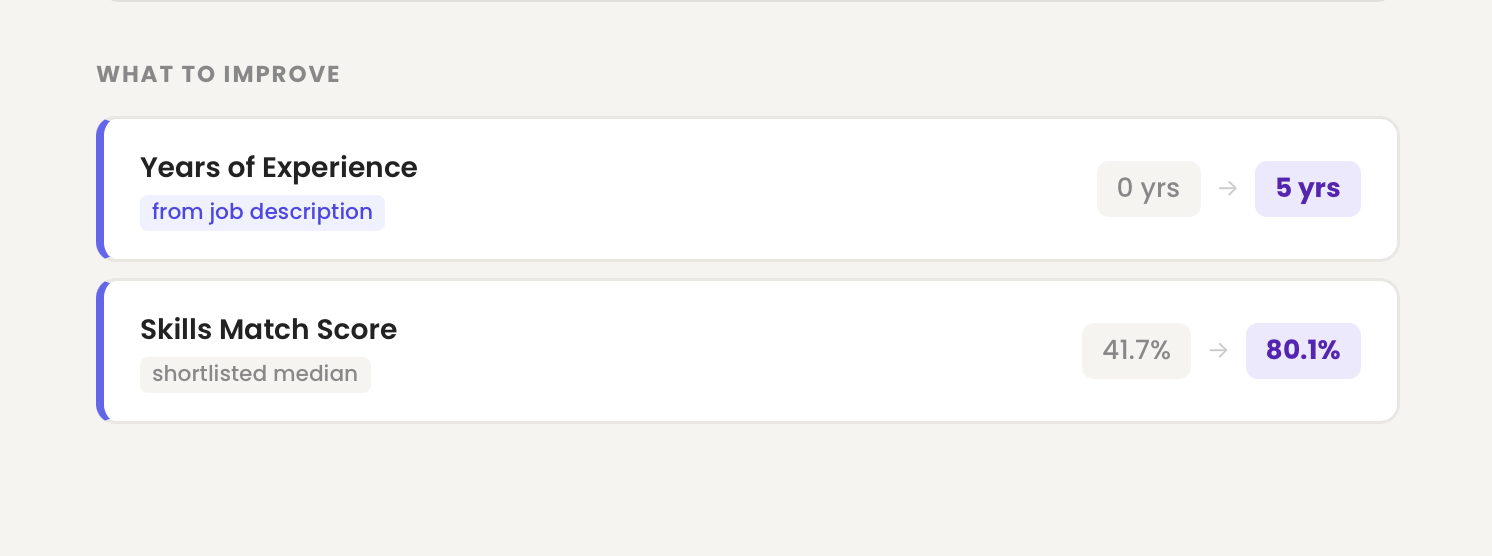
The system then highlights which specific features reduced the candidate’s chances and quantifies the gap for each one.
• End-to-End PDF Workflow
The application supports direct PDF uploads, automated AI analysis, feature preprocessing, model inference, and real-time prediction feedback within a seamless workflow.
Technical Architecture
Shortlistr follows a modular AI application architecture composed of:
AI extraction layer (Gemini API)
Preprocessing and scaling pipeline
Machine Learning inference layer (Random Forest)
Neural Network inference layer (1 hidden layer)
Confidence Resolution logic (Majority Voting)
Frontend Presentation layer (React x FastAPI web-app)
The backend is built with Python and handles:
Gemini Integration + Feature Extraction
Pre-processing and Model Loading
Prediction Logic + Feedback Generation
Machine Learning & Deep Learning Pipeline
The prediction system is centered around structured classification rather than full-text NLP.
The workflow consists of:
Resume and job description upload
Gemini-powered feature extraction
Numerical preprocessing and feature scaling
Parallel inference through:
Random Forest Classifier
Shallow Neural Network
Confidence-based decision resolution
Candidate feedback generation
This architecture allows the system to remain lightweight, interpretable, and computationally efficient while still producing reliable shortlist predictions.
User Experience
Shortlistr is designed with simplicity and clarity in mind.
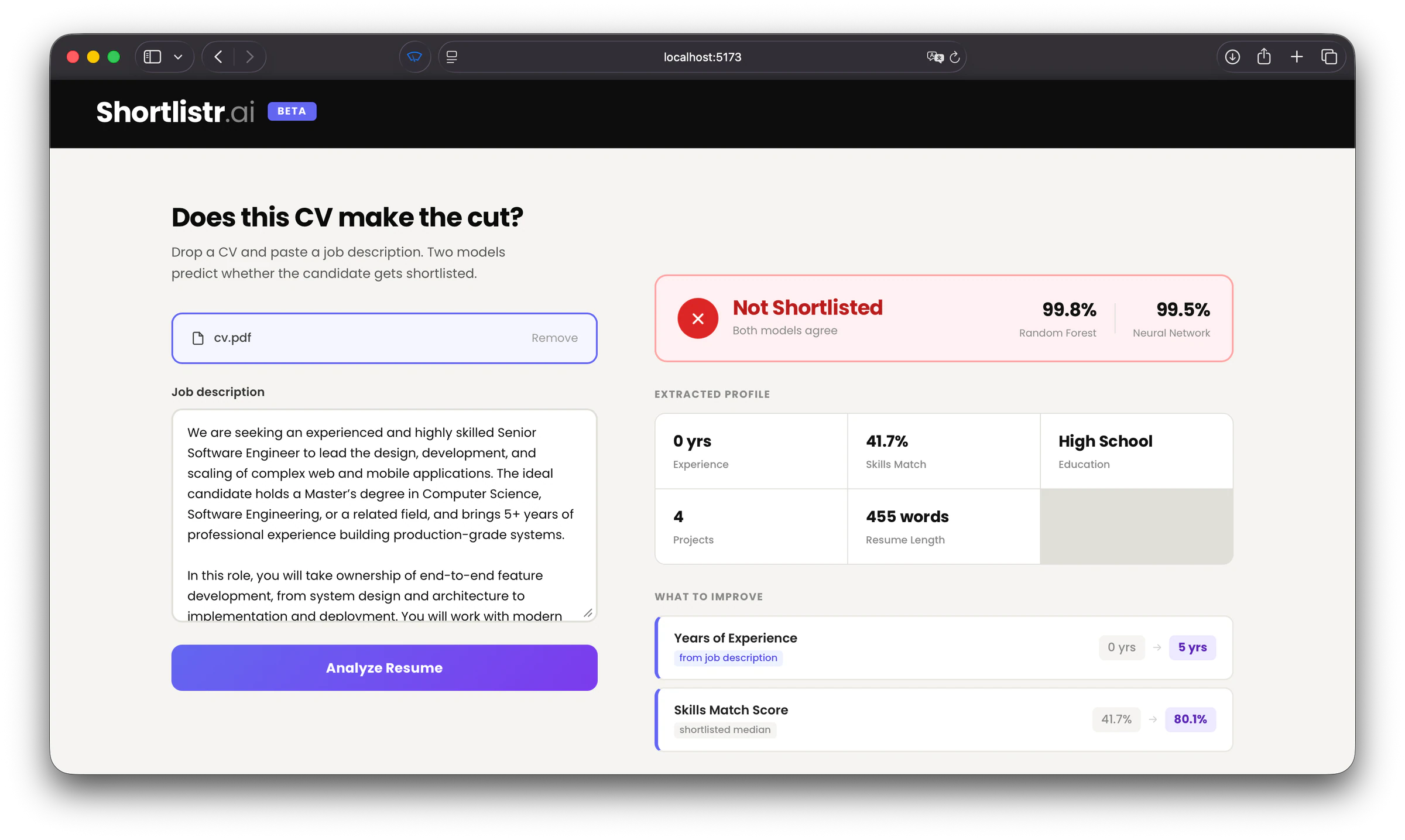
The experience prioritizes transparency over vague AI scoring, helping users understand not only the outcome of the prediction, but also the reasoning behind it.
More projects
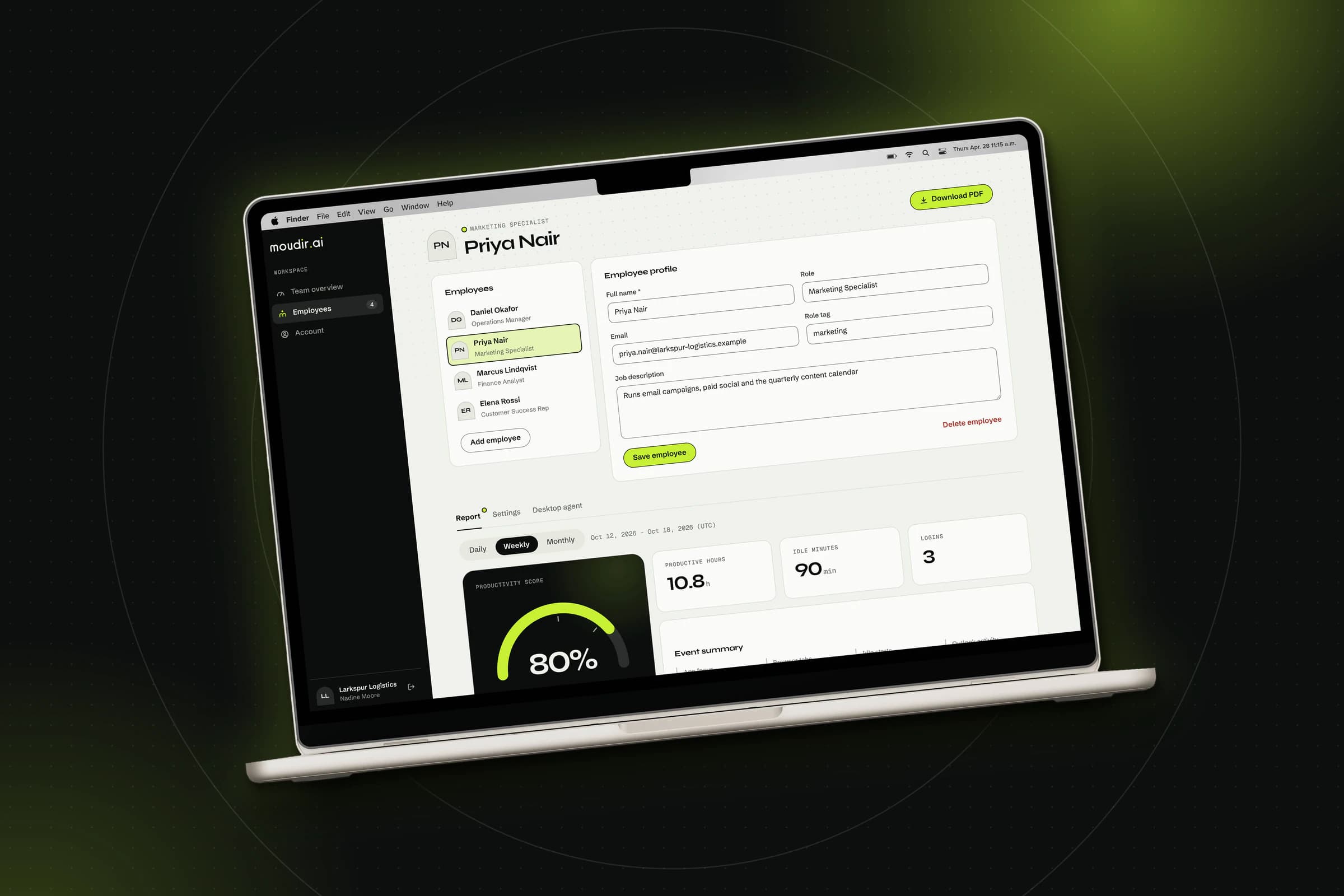
Moudir.ai
AIMoudir.ai is a B2B workforce-insight platform that gives managers a daily, weekly and monthly view of how their team works on the computer. A lightweight agent installed on each employee's…
View project
Sit My Pet
MobileSitMyPet is a mobile platform built to connect pet owners with trusted, verified pet sitters in their community. The application focuses on safety, simplicity, and reliability, allowing pet…
View project